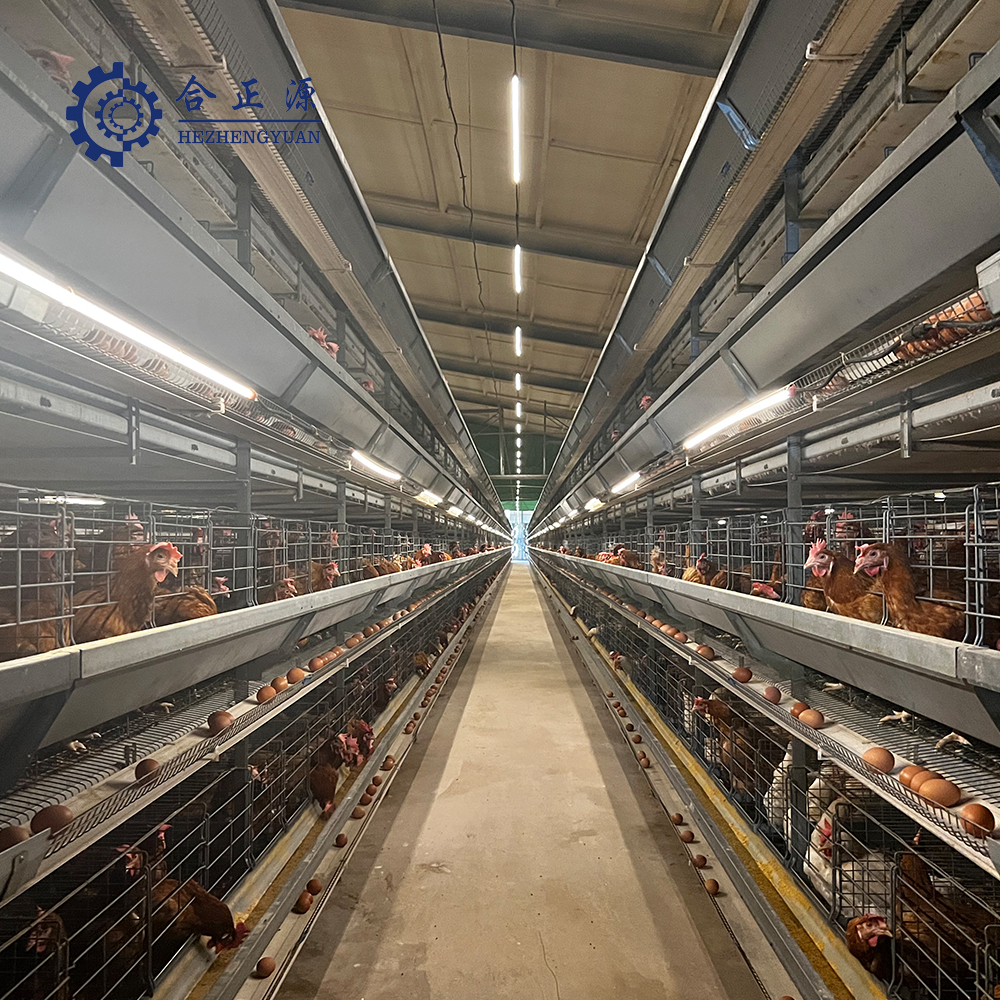
Smart poultry farming equipment includes high-quality cage structures and frames, as well as automated systems for feeding, egg collection, manure cleaning, and temperature and humidity control. These systems reduce labor requirements, lower the incidence of disease among hens, and increase egg production. Read More
Current technology for battery layer cage systems is highly mature, and installation costs have dropped significantly; meanwhile, these systems reduce long-term labor costs and increase the hens' egg-laying rate. Read More
This article explores the key benefits of modern intelligent **layer cage equipment** compared with traditional poultry breeding devices. Integrating automatic feeding, manure removal, egg collection and real-time environmental monitoring, the upgraded **layer cage equipment** optimizes space utilization and greatly cuts manual labor costs. It stabilizes flock health, reduces feed waste and egg breakage, and realizes digital, data-driven farm management. With longer service life and lower maintenance costs, the smart layer cage system delivers higher profitability, making it the ideal solution for modern commercial egg farming. Read More
Maximize meat yield and optimize FCR with our guide to commercial broiler cage systems. Compare H-type and A-type setups to boost your farm's ROI. Read More
Maximize poultry yields with an automatic chicken cage system. Reduce feed waste, automate egg collection, and lower labor costs to boost farm ROI. Read More
Scale your poultry farm using the right chicken cage system. Compare A-Type vs. H-Type setups to optimize space, cut labor, and maximize yields. Read More
Today, intelligent laying hen farming equipment has become a game‑changing solution for medium‑to‑large commercial layer farms, combining automated mechanical hardware with IoT monitoring technology to digitalize the whole egg‑production workflow from feeding, drinking, manure removal, egg collection to environmental control Read More