
T: +86-16678679070
W: +8617861003581
W: +8617861003581
A: No. 6 Changcheng South Road, Chengyang District, Qingdao, Shandong, China 266108
Views: 0 Author: Site Editor Publish Time: 2026-09-02 Origin: Site


Commercial poultry operations face compounding pressures to maximize meat yield per square meter while strictly managing feed conversion ratios (FCR), flock health, and labor costs. Farm managers must continuously optimize every phase of the grow-out cycle to maintain margins. Transitioning to or upgrading housing infrastructure requires balancing high upfront capital expenditure (CapEx) with long-term operational efficiency. Selecting the wrong housing system can lead to catastrophic ventilation failures, high mortality rates, or unmanageable labor overhead. You cannot afford structural failures mid-flock.
This guide provides an objective, technical evaluation of modern housing structures, comparing structural configurations, automation capabilities, and implementation realities to support facility-level procurement decisions. We evaluate equipment based on field performance, material durability, and biological outcomes. You will learn how to match specific cage architectures to your climate, land constraints, and production targets.
System Architecture Dictates Scalability: The choice between A-frame and vertical stacked systems fundamentally alters land requirements, ventilation needs, and maximum stocking density.
Automation Offsets Labor but Increases Risk: Fully automated feeding, watering, and manure removal drastically reduce operational expenses (OpEx) but require rigorous power redundancy and technical maintenance.
Microclimate Control is Non-Negotiable: High-density setups demand precision HVAC engineering to manage heat stress and ammonia buildup, directly impacting flock uniformity and mortality.
CapEx vs. Yield Trade-off: Advanced configurations require significant upfront investment but typically yield a lower FCR and faster turnaround times between flocks compared to traditional floor raising.
Turnkey Procurement Reduces Integration Friction: Sourcing complete, compatible systems from a single manufacturer mitigates the risks associated with piecemeal equipment integration.
Evaluating yield per square meter establishes the baseline for any poultry housing investment. Traditional floor raising limits your yield to the two-dimensional footprint of the barn. Multi-tier systems change this calculation entirely. Vertical integration multiplies the usable floor space without expanding the building footprint. You must calculate the total cage floor area across all tiers. Divide this total by the building footprint to determine your true space multiplier. A four-tier system often triples the effective rearing area. This directly increases the number of birds harvested per square meter of land.
Stocking density metrics dictate the maximum allowable weight per square meter. Industry standards for floor raising often cap at 30 to 35 kilograms per square meter, depending on the efficiency of the tunnel ventilation. Multi-tier systems push the building footprint yield to 80 kilograms per square meter or higher. Overcrowding triggers heat stress and restricts feed access. Underutilizing space wastes expensive climate control energy. You must balance the physical cage dimensions with the target harvest weight. Modern systems allow for precise density adjustments. Farm managers calculate exact bird counts based on expected final weights to maximize the return on the heated or cooled air volume.
Meat birds undergo a rapid 4-to-6-week growth cycle. This dictates highly specific space requirements. Day-old chicks weigh roughly 40 grams and need minimal space but require intense localized heat of around 32 degrees Celsius. By day 42, these same birds can exceed 2.8 kilograms. Their space requirements expand exponentially. A modern housing setup must accommodate this rapid physical expansion without requiring manual flock relocation. The system must provide adequate headroom and floor space during the final weeks of growth to prevent smothering.
This rapid turnaround also dictates strict sanitation needs. You must completely clean and disinfect the facility between flocks. This operational tempo contrasts sharply with long-term layer housing. Layer facilities house birds for over a year. Meat bird facilities undergo complete wash-downs every two months. The equipment must withstand frequent exposure to high-pressure water and harsh chemical disinfectants. Structural components must shed water quickly to allow the barn to dry before the next flock placement.
Feed represents the largest single expense in poultry farming. Optimizing the Feed Conversion Ratio (FCR) drives profitability. Restricted movement in a caged environment theoretically improves FCR. Birds expend less energy walking or foraging. They convert more caloric intake directly into muscle mass. This controlled environment minimizes wasted energy. Dropping the FCR from 1.6 to 1.5 saves massive tonnage of feed over a single year across a commercial site.
Optimized feed access promotes uniform bird weight at harvest. Automated pan feeders distribute feed evenly across all cage tiers. Every bird receives equal access to nutrition simultaneously. This prevents dominant birds from hoarding feed. High flock uniformity simplifies the harvesting process. Processing plants heavily penalize loads with high weight variance. Consistent feed presentation ensures a uniform final product. Winch systems adjust the height of the feed lines daily to match the exact breast height of the growing birds, preventing feed spillage.
Baseline expectations for survivability rely heavily on housing hygiene. Separating birds from their manure isolates flocks from common pathogens. Traditional litter systems expose birds to their own waste daily. This constant contact increases the risk of coccidiosis and necrotic enteritis. Raised wire floors or plastic mats allow manure to fall away immediately. This breaks the lifecycle of intestinal parasites and eliminates the need for chemical litter treatments.
Controlled environments further reduce disease vectors. Multi-tier systems utilize automated manure belts to remove waste continuously. This lowers ammonia levels in the air. Lower ammonia directly improves respiratory health. It prevents damage to the respiratory tract, making birds less susceptible to secondary bacterial infections. Strict disease vector control keeps mortality rates well below industry averages. Clean air and clean floors directly translate to higher livability percentages at harvest.
You cannot repurpose layer equipment for meat birds. The structural differences are fundamental. Layer cages feature sloped floors, typically angled at 7 to 8 degrees. This slope allows eggs to gently roll to a collection belt. Meat birds cannot stand on sloped floors. The unnatural angle damages their leg joints over the rapid growth cycle. They require perfectly flat surfaces to support their heavy body mass.
Meat birds also reach much higher weights than laying hens. Standard wire mesh floors cause breast blisters and footpad dermatitis in heavy birds. A dedicated commercial broiler cage system utilizes reinforced bottom meshes. Many systems incorporate specialized flexible plastic mats. These mats provide a softer, flat surface. They prevent breast blisters and support the bird's weight evenly. This protects meat quality and prevents downgrades at the processing plant. The cage doors are also wider to allow for the extraction of fully grown birds without causing wing damage.
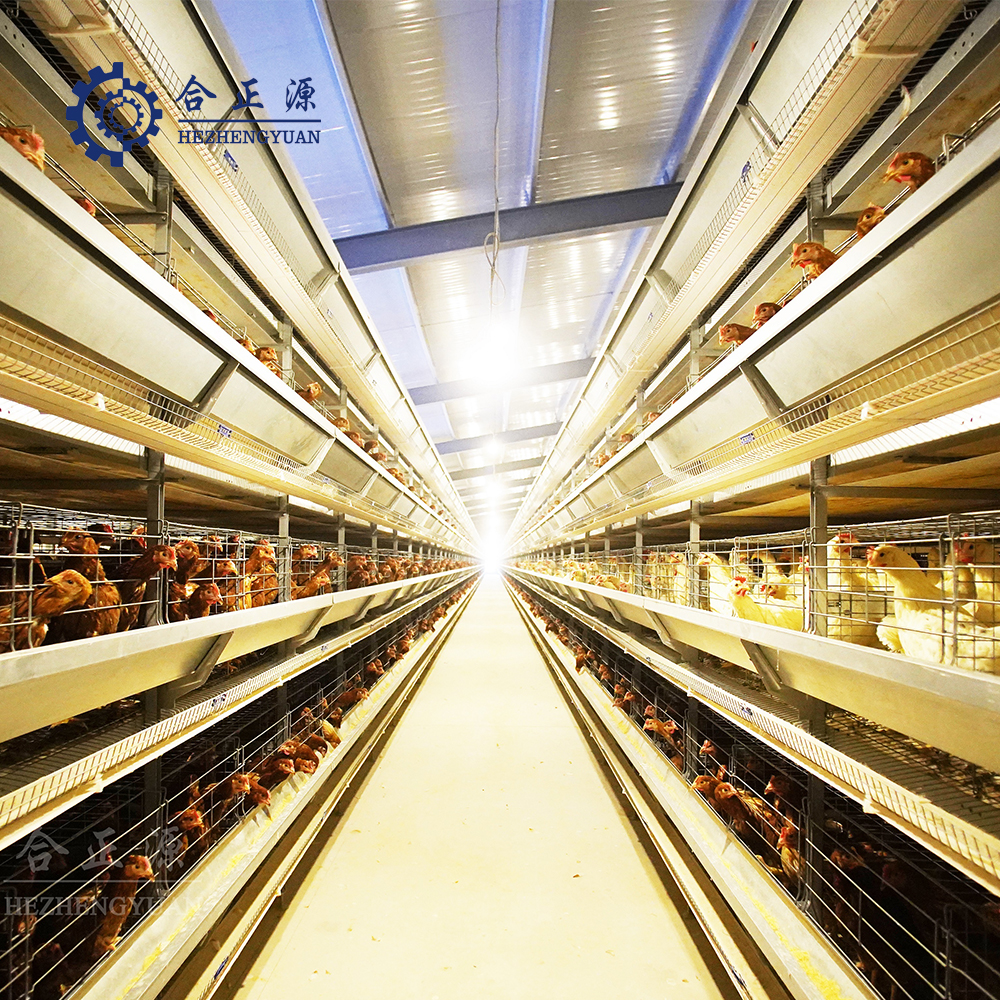
The H type broiler cage features a vertical, stacked architecture. Cages sit directly on top of one another in straight vertical columns. This design maximizes the use of vertical space within the poultry house. Each tier includes its own automated manure belt. The belts catch waste before it falls to the tier below. These systems typically range from three to six tiers high.
This configuration represents the standard for high-density commercial operations. It suits farms with limited land availability. The vertical alignment allows for narrow aisles, usually around 1.2 meters wide for inspection carts. This maximizes the total number of cage rows you can fit inside a single barn. The structural frame uses heavy-gauge galvanized steel to support the immense weight of the birds, the feed, and the equipment.
The pros and cons require careful evaluation. The system offers massive automation potential and superior space utilization. However, it demands strict requirements for advanced climate control. The dense bird population generates immense heat. You must install high-capacity tunnel ventilation to prevent localized heat stress. The high initial CapEx also presents a barrier to entry for smaller operations. Maintenance requires skilled technicians who understand complex electrical panels and motor drives.
The A-type design utilizes a stepped, pyramidal structure. The tiers offset from one another, resembling the letter A. This geometry allows manure to drop directly into a deep pit below the cages. It eliminates the need for automated manure belts under each tier. The waste falls freely through the open gaps between the offset cages. Scraper systems or front-end loaders periodically clean the concrete pit below.
This design fits mid-sized operations perfectly. It works well in moderate climates where natural ventilation is feasible. Farms with accessible, affordable labor often prefer this setup. It requires less capital for complex automation. The mechanical simplicity reduces maintenance requirements. You do not need to replace or repair torn manure belts. The open structure allows for better natural airflow between the cages.
Contrast the lower upfront cost with the operational limitations. A-type systems require higher labor inputs for periodic pit cleaning. The stepped design also results in a lower overall stocking density compared to H-type systems. The wide base of the A-frame consumes more floor space per bird. It provides a reliable middle ground for farms avoiding heavy debt but limits the maximum yield of the facility.
Evaluating modern cage systems requires a comparison against traditional methods. Traditional ground or litter-based flat raising remains common. Birds roam freely on wood shavings or rice hulls. "Online flat raising" uses single-level raised slatted floors. Birds live above their waste, but still on a single horizontal plane. A modern broiler battery cage system completely changes this dynamic by stacking the birds vertically.
Performance metrics vary significantly across these environments. Traditional litter systems often show higher incidences of footpad dermatitis due to wet litter. Slatted floors improve foot health but can increase breast blisters if the slats are too rigid. Modern cage systems with plastic mats drastically reduce both issues. Meat quality remains high because birds rest on clean, supportive surfaces. The lack of contact with wet litter prevents ammonia burns on the breast meat.
Sanitation and welfare present distinct trade-offs. Litter floors allow natural bird behaviors like dust bathing and scratching. However, they compromise strict sanitation and disease control. Battery systems restrict natural foraging behaviors. In exchange, they provide exceptional hygiene. The complete separation from feces prevents disease outbreaks. Farm managers must weigh behavioral welfare against physical health and mortality rates.
Housing System | Space Utilization | Disease Control | Ventilation Dependency | Labor Requirement |
|---|---|---|---|---|
Traditional Litter Floor | Low (Single level) | Poor (Contact with waste) | Moderate | High |
Online Flat Raising (Slats) | Low (Single level) | Moderate (Waste falls through) | Moderate | Moderate |
A-Type Cage System | Moderate (Stepped vertical) | Good (Separation from waste) | Moderate to High | Moderate |
H-Type Cage System | High (Stacked vertical) | Excellent (Automated belts) | Very High | Low |
Automated feeding and watering systems define modern poultry efficiency. Commercial setups utilize coreless auger-driven pan feeders. These mechanisms distribute feed evenly across hundreds of meters in minutes. Sensors at the end of the feed line detect when the last pan is full and automatically shut off the drive motor. Nipple drinkers provide clean water on demand. They eliminate the stagnant water found in traditional bell drinkers. Pressure regulators maintain specific flow rates, typically 30 to 40 milliliters per minute for chicks and up to 120 milliliters per minute for adult birds.
These systems drastically reduce feed waste. The pan designs feature anti-spill lips that prevent birds from flicking feed out of the trough. Height-adjustability is essential for rapidly growing birds. Winch systems raise the feeding and watering lines as the flock grows. This ensures birds always eat and drink at an ergonomically correct angle. It prevents joint strain and optimizes intake. Proper drinker height also prevents water from spilling onto the manure belts, which keeps the waste dry and manageable.
Manure management directly impacts facility health. Automated manure belts in H-type systems run the entire length of the cage row. These belts consist of 1mm thick polypropylene. Motors pull the belts, transporting waste out of the barn daily. Drive rollers utilize rubber lagging to grip the belts and prevent slipping. This continuous removal prevents ammonia buildup. Reduced facility ammonia levels lead to improved respiratory health for the flock. It also creates a safer, more comfortable working environment for farm staff.
Bird harvesting mechanisms represent a major leap in operational efficiency. Manual catching requires heavy labor and causes significant bird stress. Workers often bruise birds during loading, leading to processing downgrades. Automated bird removal systems utilize moving floors or specialized belts. The cage floors slide out, gently transferring birds onto a central transport belt. The belt carries them directly to the loading area at a controlled speed of around 10 meters per minute to avoid piling. This slashes labor costs and minimizes bruising.
Calculating ROI requires a clear framework for Capital Expenditure (CapEx) versus Operating Expenses (OpEx). Fully automated systems demand a heavy initial investment. You must purchase complex machinery, structural steel, and advanced controllers. However, this CapEx yields long-term savings. You spend significantly less on feed due to reduced waste. Labor costs drop because automation handles feeding, cleaning, and harvesting. Veterinary costs decrease due to superior disease control. The payback period depends heavily on local feed and labor costs.
Partnering with manufacturers offering complete turnkey solutions provides distinct advantages. Piecemeal procurement forces you to integrate incompatible equipment. A feeder from one vendor might not fit the cage dimensions of another. Turnkey projects ensure seamless system compatibility. The manufacturer provides installation support and comprehensive warranties. This single-source responsibility reduces integration friction and prevents costly delays during construction. You deal with one control panel that manages ventilation, feeding, and lighting simultaneously.
High-density systems carry hidden costs in climate control and ventilation dependencies. Vertical cages restrict natural airflow. The sheer volume of body heat requires sophisticated tunnel ventilation. You must install high-capacity 50-inch exhaust fans at one end of the barn, each capable of pulling 40,000 cubic feet per minute (CFM). Evaporative cooling pads at the opposite end lower incoming air temperatures. The system must maintain a static pressure of 20 to 30 Pascals to ensure air reaches the center of the cage rows. You must factor these electrical costs into your operational budget.
Material durability dictates the lifespan of your investment. Poultry houses contain highly corrosive environments. High humidity and ammonia rapidly degrade inferior metals. Material selection is critical. Hot-dip galvanized steel offers superior rust resistance compared to cold-galvanized alternatives. The thick zinc coating, typically 275 grams per square meter, protects the structural integrity of the cages for 15 to 20 years. Investing in high-quality materials prevents premature structural failure and expensive replacements.
Component | Standard Specification | Operational Benefit |
|---|---|---|
Cage Frame Steel | Hot-dip galvanized (275g/m²) | Resists ammonia corrosion for 15+ years. |
Manure Belts | 1.0mm to 1.2mm Polypropylene | Prevents tearing under heavy wet manure loads. |
Drinkers | 360-degree stainless steel nipples | Provides easy access for day-old chicks and adults. |
Bottom Mesh | Flexible plastic mat inserts | Eliminates breast blisters and footpad dermatitis. |
Installing multi-tier systems requires strict engineering prerequisites. Farm managers must evaluate structural integrity and floor loading. A fully loaded six-tier system exerts extreme weight on the foundation. Standard concrete floors will crack under this pressure. You must pour reinforced concrete foundations designed specifically for the point loads of the cage legs. The concrete should meet a minimum of 3000 PSI compressive strength and include a heavy rebar grid. Consult structural engineers before ordering equipment to ensure your building can support the weight.
Automated systems possess a critical vulnerability to power outages. A ventilation failure in a high-density house causes mass mortality within minutes. You must implement robust power redundancy. Install industrial backup generators capable of running the entire facility. A standard commercial house often requires a 500 kVA generator. Implement automated transfer switches (ATS). These switches detect grid failures and start the generators within 10 seconds. Automated fail-safes, such as magnetic drop-out doors, provide emergency natural ventilation if all power fails.
The global regulatory landscape regarding poultry housing continues to shift. Animal welfare compliance affects market access. Some regions ban traditional battery cages. You must analyze current and anticipated regional welfare standards. Selecting modern enriched colony cages helps avoid premature obsolescence. These systems provide more space and include welfare features like perches or scratch pads. Aligning your infrastructure with future regulations protects your investment and ensures you can sell to premium processors.
Pre-installation site preparation dictates the success of the build. Follow these steps to mitigate construction risks:
Verify the exact interior dimensions of the barn to ensure adequate aisle space for the selected cage width.
Level the concrete floor to a tolerance of less than 10 millimeters over a 100-meter length to prevent manure belt tracking issues.
Install heavy-duty electrical sub-panels at the end of each cage row to handle the specific amperage of the drive motors.
Test the water source for mineral content, as hard water will clog nipple drinkers and require inline filtration systems.
The optimal housing choice strictly depends on the intersection of available capital, land constraints, turnkey project goals, and local labor markets. There is no universal solution. You must weigh the high yield of vertical systems against their operational demands. Evaluate your capacity to manage complex automation and maintain rigorous climate control. Operations prioritizing lower debt and simpler maintenance should shortlist A-type cages. Enterprise-scale farms focused on maximum yield and automation should invest in H-type systems. The long-term OpEx savings justify the initial structural investments.
Take the following steps to advance your procurement process:
Conduct a localized site assessment to determine maximum structural load limits and available electrical capacity.
Calculate your target stocking density based on processor weight requirements and local climate extremes.
Request detailed technical specifications regarding steel galvanization thickness and belt materials from vendors.
Demand comprehensive warranty terms covering both structural components and electronic controllers.
Visit an active reference farm utilizing the exact equipment configuration you intend to purchase.
A: The structural layout defines the difference. A-type cages use a stepped, pyramidal design where manure falls directly into a pit. H-type cages are vertically stacked in straight columns. H-types require automated manure belts under each tier. H-types offer higher stocking density but demand more advanced ventilation.
A: Layer cages feature sloped floors to allow eggs to roll onto a collection belt. A broiler cage requires perfectly flat, reinforced floors. They often use specialized plastic mats. This flat design supports the heavy body mass of meat birds and prevents breast blisters and leg injuries.
A: The system restricts excessive physical activity. Birds expend less energy moving around compared to floor raising. Automated feeders also optimize feed access and reduce spillage. This combination allows birds to convert a higher percentage of their caloric intake directly into muscle mass, lowering the FCR.
A: Online flat raising is a single-level slatted floor system. Birds live on a raised platform above their waste, but still on one horizontal plane. It serves as a middle ground. It improves hygiene compared to litter floors but lacks the vertical space multiplication of multi-tier commercial cage systems.
A: Lifespan depends entirely on material quality and barn maintenance. Systems constructed from high-quality hot-dip galvanized steel typically last 15 to 20 years. The thick zinc coating resists the highly corrosive ammonia environment. Cheaper, cold-galvanized materials may rust and fail within 5 to 7 years.
A: Modern multi-tier systems utilize automated polypropylene manure belts. These belts sit directly beneath the wire floor of each tier. They catch the waste and transport it horizontally to the end of the cage row. A cross-conveyor then moves the manure out of the barn completely.
A: Automated harvesting eliminates manual catching. The cage floors are designed to slide out or roll like a conveyor. When activated, the floor gently moves the birds to the end of the cage row. They transfer onto a central transport belt that carries them directly to the transport trucks.


