
T: +86-16678679070
W: +8617861003581
W: +8617861003581
A: No. 6 Changcheng South Road, Chengyang District, Qingdao, Shandong, China 266108
Views: 0 Author: Site Editor Publish Time: 2026-07-02 Origin: Site


Scaling a poultry farm introduces severe operational strains. Labor dependencies multiply quickly as your flock grows. Egg hygiene often becomes inconsistent when manual handling scales up. Simultaneously, hidden profit leaks occur through steady, daily egg breakage. Moving from manual or legacy mechanical methods to a modern Egg Collection System requires upfront capital. However, this transition effectively fixes systemic production bottlenecks. Relying on outdated methods stifles growth and hurts profit margins. You need reliable automation to maintain a competitive edge in both commercial layer and breeder markets.
This article defines exactly what you should expect from this operational upgrade. We cover the core mechanical advantages of the HZY system in detail. You will discover quantifiable ROI evaluation frameworks to justify the investment. We explain real-world implementation realities and practical risk mitigation steps. Finally, we guide you on how to properly evaluate vendor reliability before making your purchasing decision.
Automated systems drastically reduce labor hours and minimize human-handling egg damage, directly increasing the volume of saleable Grade-A eggs.
The HZY system utilizes high-durability, anti-bacterial conveyor belts and gentle-transfer designs to maintain strict farm hygiene standards.
Achieving ROI requires evaluating not just equipment features, but the post-sale support and installation expertise of your Egg Collection System manufacturer.
Proper farm integration requires a phased rollout to minimize bird stress and production downtime.
Many farm managers underestimate the true cost of legacy collection methods. Manual labor seems cheaper initially. However, hidden inefficiencies erode your daily profits. You must analyze the mathematical reality of manual collection. Farms exceeding 10,000 birds face severe labor scalability limits. One worker might collect 2,000 eggs per hour. A 10,000-bird flock producing 9,000 eggs requires 4.5 hours of continuous manual labor daily. As flock sizes double, labor requirements scale linearly. Wage inflation and high staff turnover introduce massive operational risks. Relying purely on human labor threatens your farm stability.
The breakage and micro-crack problem represents another massive hidden cost. Human handlers drop eggs frequently. They squeeze them too tightly during fast packing. Poorly calibrated legacy machines also cause severe damage. Jerky mechanical movements create micro-cracks along the shell. You might not see these cracks initially. However, they drastically reduce hatchability for breeder flocks. For commercial layers, these cracks ruin market value entirely. You lose saleable Grade-A inventory every single day.
Hygiene and cross-contamination present equally critical risks. Floor eggs pose a massive threat to overall bio-security. Delayed collection exposes eggs to prolonged manure contact. Bacteria penetrate the porous eggshell quickly. Warm farm environments accelerate this bacterial growth. Manual handling exposes your farm to significant biological hazards. Workers move between different houses. They carry pathogens on their boots and hands. Manual collection cycles often leave eggs sitting in the cages for hours. You need immediate, automated transport to protect egg quality. An integrated system removes eggs from the layer house swiftly. It isolates them from ammonia, dust, and manure.
You need precision engineering to safeguard your daily yield. Modern facilities demand seamless operations from the cage to the packing room. This requires replacing jerky, outdated belts. A modern Egg Collection System uses advanced mechanics to optimize your production flow. We can examine exactly how the HZY system achieves this efficiency. You eliminate the human error factor entirely. The equipment operates at consistent speeds regardless of the time of day.
The journey from tier to collection table must remain perfectly stable. The HZY system utilizes specialized, stretch-resistant egg belts. These belts ensure smooth, vibration-free transport. Excessive vibration causes micro-cracks. We eliminate this risk using high-tension, anti-slip belt materials. The system features carefully engineered "soft-touch" transfer points. Eggs transition between different conveyor sections gently. Specialized deflectors guide the eggs along the belt edges safely. These deflectors prevent egg pile-ups during peak morning laying hours. They stop costly collisions before they happen.
Clean eggs command higher market prices. Manual cleaning wastes valuable labor hours. The HZY system incorporates intelligent self-cleaning mechanisms. These components separate feathers, dust, and manure from the eggs. The filtration happens before eggs reach the final packing station. Gentle rotating brushes sweep away loose debris effectively. Dirt-removal slots allow manure particles to fall through the track. This prevents debris from accumulating on the conveyor belts. Your farm maintains strict hygiene standards effortlessly. This automated cleaning step prevents cross-contamination in the packing room.
Egg laying patterns fluctuate throughout the day. Fixed-speed machines often cause bottlenecks during peak hours. The HZY system solves this using variable frequency drives (VFD). These drives automatically adjust collection speeds based on daily yield patterns. Sensors detect high egg volumes on the belts. The VFD increases the conveyor speed to clear the tiers faster. When laying slows down, the belts decelerate accordingly. This prevents system bottlenecks entirely. It also reduces unnecessary wear on the main drive motors. Intelligent speed control keeps your operations smooth and predictable.
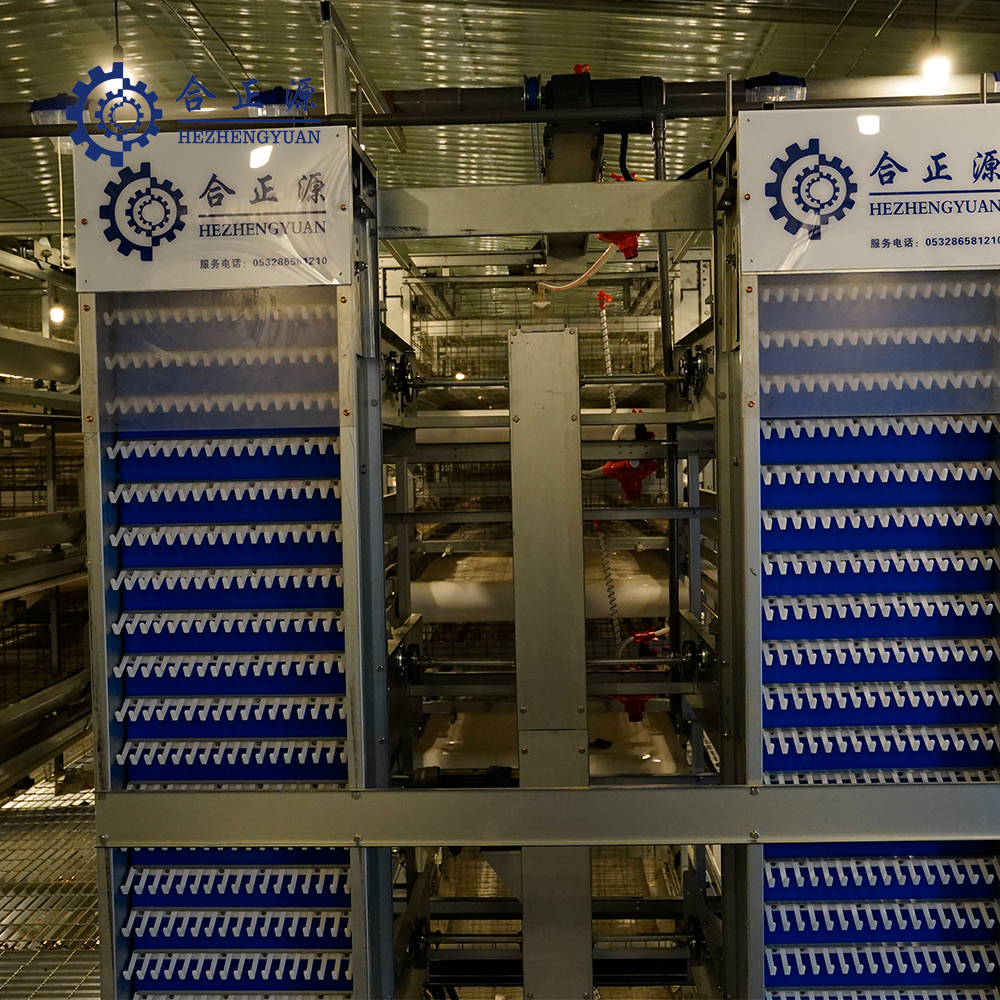
Investing in farm automation requires a clear financial justification. You cannot evaluate success based purely on daily convenience. We must establish a robust framework to calculate your return on investment accurately.
Labor reallocation:
Automation does not necessarily mean firing your workforce. Instead, it involves shifting staff from manual collection to higher-value tasks. You can reassign workers to flock health monitoring. They can manage vaccination schedules more effectively. Staff can perform detailed data analysis on feed consumption. This labor reallocation directly improves overall farm yield. Healthy, closely monitored birds produce more eggs. Your staff becomes proactive rather than reactive.
Quantifying the reduction in egg loss:
Recovered inventory pays for the equipment rapidly. You can use a baseline assumption model to calculate these specific savings. Let us look at a standard 10,000-bird commercial layer house.
Determine your current manual breakage rate (e.g., 4%).
Identify your daily egg production (e.g., 9,500 eggs).
Calculate daily lost eggs under manual methods (380 eggs per day).
Implement the automated system, reducing breakage to 1%.
Calculate new daily lost eggs (95 eggs per day).
Multiply the 285 recovered eggs by your local market price.
This mathematical framework shows immediate daily revenue recovery. You stop throwing away perfectly good product. The system pays for itself through this recovered inventory over time.
Energy and maintenance efficiency:
Operational overhead matters deeply to your profitability. The HZY system utilizes low-energy consumption motors. These efficient motors keep your monthly electricity bills manageable. Furthermore, the system uses wear-resistant parts throughout its entire design. Cheaper alternatives often require frequent replacement parts. These budget machines cause hidden downtime and maintenance expenses. Choosing high-quality components ensures long-term cost benefits. Your maintenance team spends less time fixing broken belts. You experience fewer emergency repairs during critical production hours.
Performance Metric | Legacy/Manual Methods | HZY Automated System |
|---|---|---|
Labor Requirement | High (4+ hours per 10k birds) | Low (Minimal supervision required) |
Egg Breakage Rate | Typically 3% - 5% | Consistently under 1% |
Hygiene Control | Poor (Manure contact common) | Excellent (Integrated filtration) |
Collection Speed | Fixed / Slow | Variable (VFD controlled) |
Your choice of vendor dictates your long-term success. Buying equipment is only the first step. You need a reliable Egg Collection System manufacturer to support your growth. Off-the-shelf systems routinely fail in custom farm layouts.
Engineering and customization:
Every poultry house features unique architectural constraints. Standardized systems cannot adapt to uneven floors or non-standard cage heights. A credible manufacturer conducts rigorous site audits before manufacturing begins. They customize belt widths to match your specific egg volumes. They adjust tier heights to integrate perfectly with your existing cages. They design the layout flow to navigate around structural support pillars. This customization prevents costly installation delays.
Material compliance and longevity:
Poultry houses are highly corrosive environments. High ammonia levels destroy cheap metals rapidly. You must evaluate the material compliance of the proposed equipment. The HZY system utilizes thick galvanized steel frameworks. These frameworks resist ammonia corrosion effectively. The egg belts use specialized polymers designed specifically for high-humidity environments. Selecting corrosion-resistant materials guarantees equipment longevity. You avoid catastrophic structural failures down the line.
Best Practices for Vendor Evaluation:
Demand verifiable references from farms of similar scale.
Inspect the gauge and coating quality of the structural steel visually.
Review the specific warranty terms for all electrical components.
Service Level Agreements (SLAs) and parts availability:
Equipment downtime equals immediate lost revenue. Stranded eggs lose their market value quickly. You cannot wait weeks for replacement parts to arrive from overseas. You must choose a partner offering transparent maintenance schedules. A strong manufacturer provides rapid parts dispatch from regional hubs. They offer robust technical support through dedicated hotlines. Comprehensive SLAs protect your daily operations. They ensure a technician arrives promptly if a critical VFD motor fails.
Upgrading your farm infrastructure requires careful planning. Rushing the installation introduces severe operational risks. You must understand the implementation realities to protect your flock effectively.
Pre-installation site preparation:
A farm manager must secure specific prerequisites before the equipment arrives. Failing to prepare causes expensive installation delays. You should focus on these critical areas immediately:
Verify all floor grading and structural load capacities.
Upgrade the electrical panels to support the new VFD motors.
Install dedicated backup generators for the packing room.
Clear all debris and old equipment from the designated installation zones.
Ensure adequate lighting for the technicians performing the final assembly.
Minimizing flock disruption:
Birds are highly sensitive to environmental changes. Loud noises and strange machinery cause severe stress. This stress induces immediate drops in daily egg production. You need a realistic strategy for phasing the rollout. Never install the entire system simultaneously if the birds are currently laying. Schedule heavy drilling and metal cutting during the birds' natural rest periods. Implement temporary visual barriers between the flock and the installation crew. Phasing the rollout minimizes disruption significantly. You maintain stable production yields during the physical transition.
Operator training:
Even the best equipment fails if operated incorrectly. You must prioritize comprehensive operator training. Farm staff need specific instructions on system calibration. They must learn how to perform daily visual inspections on the belts. Technicians should teach your team basic troubleshooting techniques. Staff must know how to clear minor jams safely without damaging the belts. They need clear protocols for emergency shutdowns. Proper training prevents catastrophic failures. It empowers your team to take absolute ownership of the new technology.
Common Mistakes to Avoid:
Skipping the daily cleaning of the debris filtration brushes.
Ignoring unusual motor noises instead of reporting them immediately.
Failing to recalibrate belt tension after the first month of heavy use.
Adopting the HZY system represents a major operational milestone. It is not merely a standard equipment upgrade. It is a strategic shift toward predictable yield and absolute labor stability. You eliminate the hidden costs of manual breakage and cross-contamination entirely. You reallocate your workforce to highly profitable flock management tasks. Proper automation secures your competitive advantage in a demanding agricultural market.
Your next step is clear and actionable. You need to analyze your specific operational data. Prompt your farm managers to request a customized capacity audit today. Ask for a detailed ROI projection based on your specific flock size. Compare your current daily breakage metrics against the automated benchmark. Take control of your production flow and secure your farm's future profitability.
A: The system is highly scalable and custom-engineered for your specific needs. It adapts seamlessly to mid-sized operations of 10,000 birds up to massive commercial layer houses exceeding 100,000 birds. By customizing belt widths, motor capacities, and tier integrations, the system handles peak daily volumes without bottlenecks. Its modular design allows you to expand the collection lines as your farm capacity grows.
A: The system integrates directly with your farm's backup generators to ensure uninterrupted operation. In the event of a total electrical failure, it features manual override protocols. These fail-safes allow operators to safely advance the belts manually or secure the current load. This prevents eggs from becoming stranded on the conveyors, protecting them from prolonged exposure to ammonia and temperature drops.
A: Realistic lifespan expectations range from 5 to 7 years, depending heavily on daily operating conditions. HZY uses durable, stretch-resistant polymers designed specifically for harsh farm environments. Adhering to regular maintenance, keeping the belts clean of acidic manure, and maintaining proper tension will maximize their lifespan. Routine visual inspections help identify minor wear before full replacement becomes necessary.
A: Yes, the system is fully compatible with both legacy A-frame and modern H-frame battery cages. A credible manufacturer conducts a thorough engineering assessment of your current infrastructure. They evaluate tier heights, aisle widths, and floor grading. Based on this audit, they customize transfer points and deflector guides to retrofit the new automated belts seamlessly into your existing cage framework.


