
T: +86-16678679070
W: +8617861003581
W: +8617861003581
A: No. 6 Changcheng South Road, Chengyang District, Qingdao, Shandong, China 266108
Views: 0 Author: Site Editor Publish Time: 2026-07-07 Origin: Site


Relying on manual labor for egg gathering severely limits modern poultry farm operations. Facility managers face a constant, uphill battle against rising physical labor demands and inconsistent handling protocols day after day. Manual collection inherently throttles scalability across large-scale commercial facilities. Human handling inevitably leads to higher breakage rates, a sharp increase in dirty floor eggs, and highly erratic throughput levels during peak hours.
A successful automation upgrade directly solves these structural problems. You achieve consistent daily throughput and maintain sub-1% equipment-caused breakage across the board. Furthermore, proper automation ensures seamless integration into your existing cage or cage-free structural layouts. This step-by-step guide breaks down technical system mechanics, implementation risks, and critical vendor capabilities. You will learn exactly how to evaluate physical equipment mechanics and operational adjustments before making any major capital investment.
Automated systems transport eggs from the nest or cage directly to the packing room using a synchronized flow of longitudinal belts, vertical elevators, and cross conveyors.
Upgrading to an automated Egg Collection System typically reduces egg breakage rates significantly while reallocating labor from collection to quality control.
System viability relies heavily on component quality—specifically belt material and tensioning—to prevent micro-cracks and contamination.
Choosing the right Egg Collection System manufacturer requires evaluating their ability to customize the layout to your specific tier structure and provide localized maintenance support.
A properly configured Egg Collection System begins at the exact tier level. Nests and cages feature a specialized gradient design on the floor. This slight slope serves a highly critical purpose. It ensures eggs roll gently outward upon laying. They land smoothly onto woven polypropylene or nylon egg belts. These continuous fabric belts run directly along the back of the housing. Farm engineers must configure the floor gradient carefully. If the slope is too steep, eggs collide forcefully. If it remains too shallow, they stay stranded inside the cage. Designers engineer the initial catch area to absorb sudden kinetic energy. This smart design prevents micro-cracks from forming early in the collection process.
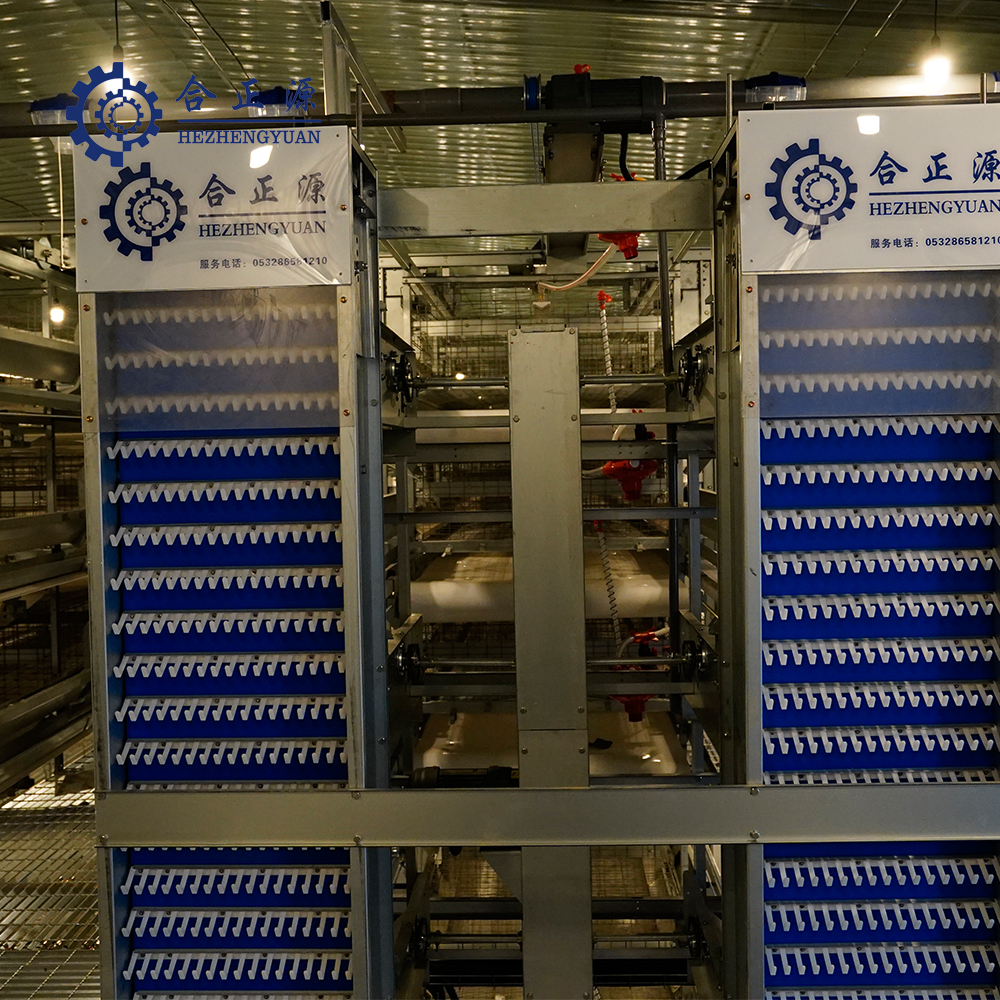
Modern sheds utilize multi-tier rows to maximize limited vertical space. You must move eggs safely down to a single processing level. Vertical transfer mechanisms handle this complex physical task flawlessly. Facilities commonly use egg elevators, lifters, or continuous de-escalators. These dynamic components receive eggs from the elevated longitudinal belts. They lower them securely to the designated ground level. Impact damage poses a major risk during this phase. Equipment designers integrate soft-grip surfaces to protect fragile shells. Curved guide rails also slow the downward descent rate. They keep eggs completely stable during all vertical transitions. You minimize structural impacts by keeping the transition angles exceptionally gradual.
Eggs reach the bottom level safely without damage. Next, they undergo transverse conveying, often called cross-collection. Multiple shed rows feed directly into one centralized cross conveyor belt. This unified belt routes everything toward the central packing room. Speed synchronization determines your overall success here. The cross conveyor must match the output flow of the longitudinal belts. If it runs too slowly, dangerous bottlenecks form quickly. Eggs pile up and crush one another under pressure. If it runs too quickly, you risk excessive rolling and violent collisions. Operators rely heavily on variable frequency drives. These drives allow you to fine-tune internal motor speeds. They keep the entire directional flow synchronized perfectly.
Eggs travel steadily along the main cross conveyor. They approach the final automated processing stage. However, the system must filter them before actual packing. Pre-cleaning mechanisms handle this necessary sanitation task. You will find integrated belt brushes and debris traps along the route. They actively remove loose feathers, dust, and dried manure. They also catch soft-shelled eggs before they burst open. Clean eggs then proceed smoothly to the final packing table. The cross conveyor delivers them directly to a commercial grading machine. Alternatively, it feeds a large centralized packing station. This continuous mechanical filtration protects your expensive downstream machinery. It keeps your packing room highly sanitary and efficient.
Egg Belt Material & Calibration plays a foundational role in system integrity. Choosing the right fabric material makes a massive difference operationally. You should specifically look for anti-static and anti-bacterial properties. Anti-static threads repel thick environmental dust accumulation efficiently. Anti-bacterial surface treatments aggressively slow harmful microbial growth. Tensioning calibration proves equally vital for daily operations. Belts stretch naturally over time under heavy physical loads. If a belt sags, eggs cluster together tightly in the depressions. They collide forcefully and crack. Routine tension calibration prevents this dangerous sagging entirely.
Egg Baffles and Guiding Systems provide essential protection at transfer points. Eggs build up forward momentum as they travel. They accelerate rapidly when transitioning between different belt junctions. You must slow this dangerous momentum safely. Baffles and guiding systems perform this vital job continuously. They utilize pliable, highly shock-absorbing materials. Sponge-like plastics and soft rubber deflectors are highly effective here. They catch fast-moving eggs gently. They redirect them seamlessly without compromising the fragile shell integrity.
Debris Removal Modules keep the entire operation commercially viable. Poor sanitation directly impacts your final bottom line. Dirty belts spread unseen contaminants rapidly across the facility. Debris removal modules combat this pervasive problem. Automated brushes install cleanly underneath the main conveyor line. They continuously scrub the return side of the belt. This friction prevents sticky residue from hardening onto the fabric. You maintain highly sanitary conditions effortlessly. You also drastically reduce the ongoing risk of biological cross-contamination.
Inspect belt tension manually every two weeks to prevent sagging.
Replace shock-absorbing baffles immediately when they show deep wear grooves.
Empty physical debris traps daily to prevent sudden brush jams.
Sanitize guide rails weekly to remove invisible bacterial buildup.
Labor Reallocation remains the biggest operational shift you will experience. Automated systems fundamentally change daily farm operations. You no longer pay workers simply to pick up eggs manually. Instead, you shift your entire workforce focus entirely. Employees transition away from highly repetitive physical collection. They now dedicate critical time to flock health monitoring. They actively manage system oversight and fine-tune environmental climate controls. This strategic reallocation maximizes your human capital output.
Operational Metric | Manual Collection | Automated System |
|---|---|---|
Labor Focus | Repetitive physical gathering | Flock health and system monitoring |
Breakage Rate | 3% to 5% due to human error | Consistently sub-1% |
Scalability | Severely limited by headcount | Scales effortlessly via motor drives |
Peak Efficiency | Drops during long shifts | Remains steady 24/7 |
Breakage and Yield Optimization metrics clearly favor mechanical solutions. Human error guarantees a high baseline level of product loss. Tired workers accidentally drop heavy baskets. They sometimes squeeze shells too tightly during transfer. Automated handling entirely eliminates these unpredictable human factors. It offers highly controlled, perfectly standardized handling continuously. When you compare baseline metrics, the financial difference becomes clear. Automation frequently drops equipment-caused breakage rates well below one percent. You instantly recover lost daily yield.
Throughput Scalability dictates long-term commercial growth potential. Large-scale operations require highly predictable daily workflows. Manual collection slows down significantly as poultry sheds expand. Automation scales effortlessly regardless of the building size. A data-driven evaluation proves this operational reality quickly. You can calculate precise collection times easily. You count exact eggs collected per hour reliably. Throughput remains completely steady regardless of your total flock size. This clean data helps you determine an accurate payback period. The financial return timeline becomes obvious very quickly.
Cage vs. Cage-Free Compatibility demands strict engineering attention upfront. You must adapt collection mechanics to fit your exact house design. A-frame cages require distinctly different vertical clearances than traditional battery cages. Aviary nests demand highly specialized layout integration. You cannot simply force a generic solution into a complex structure. Ensure your new equipment matches the specific tier geometry perfectly. A mismatched system causes constant operational jams.
Space and Layout Constraints often surprise unprepared facility managers. Modern machinery requires an adequate and clear physical footprint. You must thoroughly assess your available floor space carefully. Cross conveyors inherently need wide turning radii to function. Head-end elevators require substantial vertical clearance near the ceiling. Measure your interior shed dimensions highly accurately. You will avoid tremendously costly structural modifications during the final installation phase.
Maintenance Assumptions must remain grounded in harsh mechanical reality. No mechanical matrix runs flawlessly forever without human intervention. You must acknowledge the daily reality of ongoing system upkeep. Belt tracking adjustments become a routine weekly task. You must lubricate heavy drive motors regularly. Optical sensors require frequent wipedowns to function correctly. Proactive maintenance prevents sudden, catastrophic operational downtime. It protects your large capital investment long-term.
Engineering and Customization capabilities separate premium vendors from basic suppliers. Every single poultry shed presents uniquely difficult architectural challenges. You need a vendor capable of true, precise mechanical engineering. You must evaluate if the manufacturer can design a bespoke layout. They should navigate your specific structural shed dimensions effortlessly. They must accurately accommodate your exact tier heights. A capable Egg Collection System manufacturer will provide detailed CAD drawings upfront. These schematics remove all installation guesswork entirely.
Component Durability and Sourcing determine your future uptime reliability. Heavy equipment breakdowns halt farm production instantly. You need immediate, fast access to vital replacement parts. Evaluate the actual availability of raw mechanical materials. Can they supply fresh replacement belts, motors, and delicate sensors quickly? Local or highly efficient global sourcing matters immensely. It minimizes future operational downtime drastically. You cannot afford to wait weeks for a single drive belt.
Installation and Post-Sale Support guarantee a smooth transition phase. Buying the physical equipment represents only the very first step. Installation quality heavily dictates long-term system success. You must choose a vendor offering truly comprehensive post-sale support. They should provide expert on-site calibration during the initial rollout. They must train your internal staff thoroughly. Transparent, easily understood warranty terms remain strictly non-negotiable.
Request a comprehensive custom site assessment before signing any contract.
Verify spare part warehouse locations to guarantee exceptionally fast shipping.
Review warranty terms for electrical and mechanical parts separately.
Ask for contact references from similarly sized commercial farm operations.
An automated setup functions as a highly synchronized transport matrix. Engineers designed it specifically to protect your overall daily yield. It maximizes operational efficiency and removes unpredictable human variables. By upgrading, you eliminate tedious manual tasks completely. You transition your staff into higher-value farm management roles. Precision belts, smart elevators, and clean cross conveyors work in perfect harmony. They deliver pristine eggs directly to your processing room safely.
Farm managers should audit their current breakage rates immediately. You must calculate your ongoing manual labor costs honestly. Compare those strict figures against the metrics provided here. Request a site-specific layout assessment from a rigorously vetted manufacturer. You will uncover exactly how much yield you are losing daily. Take proactive steps to secure your facility's operational and financial future today.
A: Yes, they handle them highly efficiently. Engineers design specific clearance gaps directly along the belt lines. Integrated automated brushes constantly sweep away soft-shelled eggs. This proactive clearing prevents sticky residue from jamming the mechanical rollers.
A: Lifespan depends directly on fabric material quality and maintenance frequency. Premium woven polypropylene belts typically last between five to eight years. Routine tensioning and daily automated brushing significantly extend this operational timeline.
A: Retrofitting is highly feasible for most modern structural builds. You must ensure your cage or nest setups align structurally. Sometimes retrofitting requires very minor layout modifications. An engineering assessment determines feasibility.


