
T: +86-16678679070
W: +8617861003581
W: +8617861003581
A: No. 6 Changcheng South Road, Chengyang District, Qingdao, Shandong, China 266108
Views: 0 Author: Site Editor Publish Time: 2026-06-30 Origin: Site


High-density battery cage farming rapidly scales egg production. However, it proportionately scales complex waste management challenges. Manual or semi-automatic manure removal often becomes a severe bottleneck. You cannot easily expand facilities when daily waste extraction relies entirely on manual labor. Unmanaged manure quickly escalates toxic ammonia levels inside the poultry house. This dangerous gas buildup directly impacts flock respiratory health. It heavily lowers daily egg production rates. It also jeopardizes your facility regulatory compliance. Upgrading to a specialized Automatic Manure Cleaning System solves this critical issue completely. It shifts waste management from an unpredictable daily labor liability to a highly reliable, automated process. By keeping the environment consistently clean, you actively protect both flock health and critical operational margins. Readers will learn how modern waste removal systems function. You will discover how to evaluate core mechanical criteria. Finally, we will guide you on selecting the right manufacturing partner for long-term farm success.
An Automatic Manure Cleaning System is not just a hygiene tool; it is a fundamental driver for lowering facility ammonia levels (target <25 ppm) and improving feed conversion ratios.
Conveyor belt systems generally offer superior moisture control and compatibility with multi-tier battery cages compared to traditional scraper systems.
Long-term ROI relies heavily on component quality, specifically Polypropylene (PP) belt durability and galvanized frame corrosion resistance.
Selecting the right Automatic Manure Cleaning System manufacturer requires evaluating their track record with installation support, spare parts availability, and climate-specific engineering.
Legacy waste handling simply breaks down as commercial poultry operations grow. Predictable scaling remains impossible when you rely heavily on manual labor for waste removal. Human workers face constant fatigue and high turnover rates. Unavoidable human error leads to missed cleaning cycles. You cannot sustain a massive, high-density facility on unpredictable labor schedules. Relying on manual scraping inherently limits how many birds you can safely house.
Furthermore, delayed manure extraction creates a severe ammonia threat. Natural manure buildup quickly releases highly concentrated ammonia gas. Wide industry standards mandate keeping indoor ammonia below 25 parts per million (ppm). When levels spike above this safe threshold, birds suffer immediate mucosal damage. Severe respiratory diseases spread rapidly through the vulnerable flock. Consequently, hens drop their egg yields drastically. Feed conversion ratios plummet, and flock mortality rates rise significantly.
Environmental compliance and strict biosecurity protocols demand vastly better solutions. Stricter agricultural regulations heavily penalize poor waste management practices. Disease prevention protocols require immediate, cross-contamination-free waste extraction from the poultry house. Moving wet manure manually through open aisles increases the risk of spreading deadly pathogens. You need a closed, highly automated method to transport waste outside safely. Modern biosecurity depends entirely on minimizing human contact with raw poultry waste.
Farms typically choose between two primary automation categories for waste removal. Understanding their distinct mechanisms helps you make informed infrastructure decisions for your specific barn layout.
First, consider scraper manure removal systems. They use a heavy-duty, motor-driven blade positioned inside a deep concrete trench. As the electric motor runs, the steel blade drags accumulated waste to the end of the barn. Scrapers fit best in single-tier setups or very specific A-frame configurations. They also suit older barn retrofits and heavily budget-constrained operations. However, scraper systems have notable operational limitations. They consistently leave manure with higher moisture content. Dragging heavy, wet waste along concrete causes significant trench wear over time. Because the wet waste stays exposed longer, the house retains much higher ammonia levels.
Alternatively, conveyor belt manure cleaning systems offer a vastly modernized approach. These systems utilize tough Polypropylene (PP) belts positioned directly under each battery cage tier. The moving belts seamlessly transfer fresh waste to a transverse conveyor at the barn's end. Belt systems perfectly fit modern H-frame and multi-tier A-frame battery cage farms. Their operational advantages are substantial. They keep the manure mostly dry and drastically reduce dangerous ammonia emissions. Because belts isolate waste per tier, they prevent cross-tier contamination entirely. The resulting dry output is immediately suitable for direct processing or commercial drying facilities.
System Comparison Overview
Feature | Scraper Systems | Conveyor Belt Systems |
|---|---|---|
Primary Mechanism | Motor-driven blade in a concrete trench | Polypropylene belts directly under cage tiers |
Best Application Fit | Single-tier setups, older barn retrofits | Multi-tier H-frame and modern A-frame layouts |
Moisture Control | Poor (manure remains wet and clumps) | Excellent (facilitates rapid air drying) |
Ammonia Reduction | Moderate to Low | Exceptionally High |
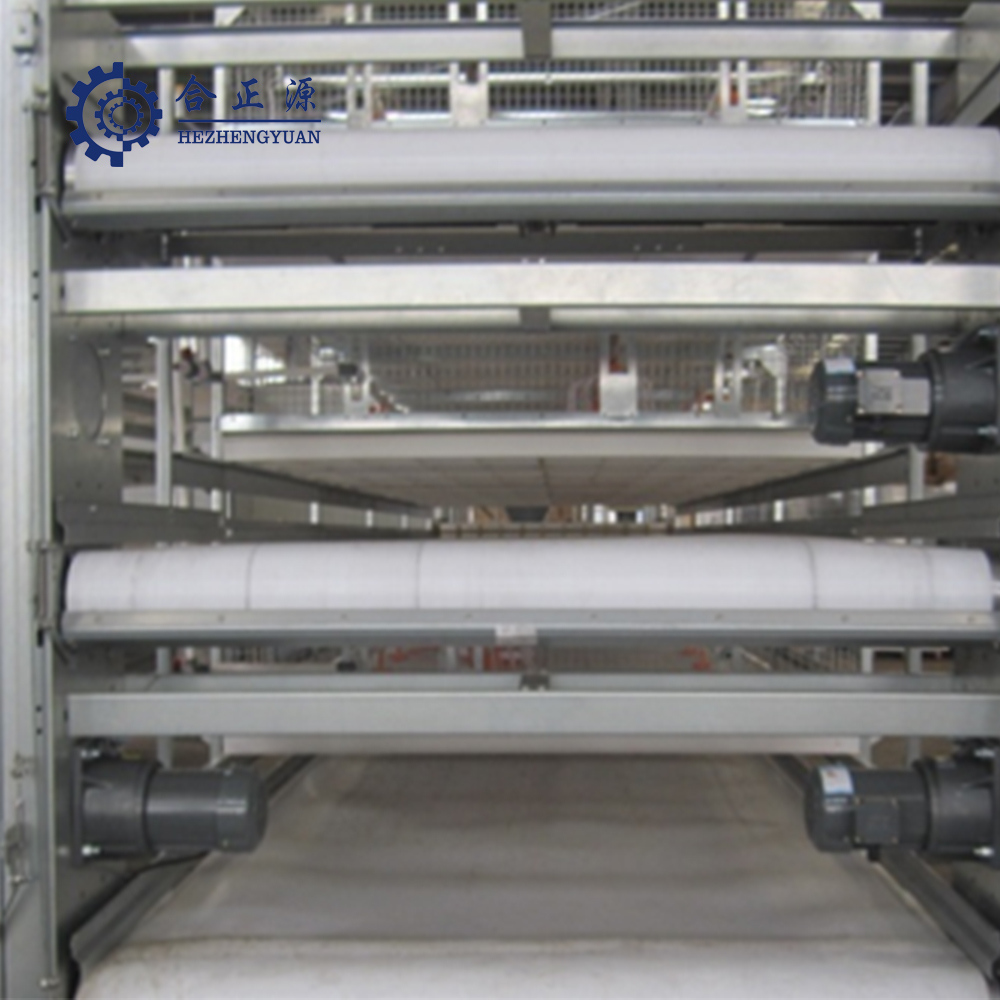
Not all mechanical systems perform equally under heavy daily waste loads. You must evaluate specific mechanical criteria closely before finalizing any equipment purchase. Proper initial evaluation prevents costly downtime later.
Belt material and precise thickness matter immensely. Industry standards strongly dictate using 1.0mm to 1.2mm virgin Polypropylene (PP) material. Virgin PP resists severe stretching, sudden snapping, and harsh chemical degradation. Poultry waste contains highly acidic compounds that break down inferior plastics. You must avoid cheap, recycled plastics entirely. Recycled belts turn brittle quickly in harsh, humid farm environments.
Next, carefully examine the motor and drive mechanisms. Your system absolutely requires high-torque, low-speed RV reduction motors. Typical power ratings for these specific motors range from 0.75kW to 1.5kW. These robust, heavy-duty motors handle peak waste loads easily without overheating or stalling. A weak motor will inevitably burn out during peak production cycles.
Structural anti-corrosion represents another absolute mandatory requirement. A closed poultry house environment is highly corrosive due to constant moisture and trapped ammonia. All vital steel components, including support brackets and drive rollers, must feature hot-dip galvanization. Standard spray paint or very light zinc coatings will rust away rapidly. Once the structural frame rusts, entire system integrity fails.
Finally, ensure the equipment includes dedicated deviation prevention technology. Moving belts naturally want to wander sideways during daily operation. Look for systems expertly engineered with ultrasonic welding on belt seams. They must also include specialized tracking rollers. These critical components prevent the belt from slipping off-center and tearing against the sharp metal frame.
Even the highest quality equipment fails if installed or maintained improperly. You must understand the harsh operational realities of running these automated systems continuously.
Installation prerequisites remain incredibly strict. You face a critical need for precise concrete floor leveling and perfectly accurate cage alignment. Misaligned cages essentially guarantee severe belt tracking failures. If the steel framework sits unevenly, the plastic belt will continuously rub. Eventually, the heavy friction will snap the belt entirely.
Routine maintenance is absolutely non-negotiable. Establishing a strict maintenance schedule prevents catastrophic system breakdowns. Follow these essential steps religiously:
Daily Inspections: Visually check the main belt tracking mechanism. Observe the transverse conveyor transition points closely for any heavy clogs or unusual grinding noises.
Weekly Adjustments: Perform precise tension adjustments on the drive system. You must compensate for thermal expansion during hot days or gradual load stretching over the week.
Monthly Servicing: Grease all primary motor bearings thoroughly. Clear any hardened debris, broken eggs, or feathers from the main drive rollers.
You must acknowledge common failure points so you can actively prevent them. Snapping belts and sudden motor burnouts certainly do happen. However, they usually occur due to heavily deferred maintenance. Overloading the system far beyond its rated capacity also causes immediate mechanical failure. Run the automated system at prescribed daily intervals to avoid extreme, unmanageable weight accumulation.
Choosing the right supplier dictates your long-term operational success. You need a reliable partner capable of delivering durable hardware and sustained engineering support over many years.
First, assess their technical customization capabilities. Can the manufacturer adapt the proposed system to your existing cage dimensions? They must successfully adjust the hardware to specific house lengths and unique grid layouts. A generic, one-size-fits-all approach rarely works in large-scale commercial poultry farming.
Second, strictly demand supply chain and material transparency. Ensure the chosen manufacturer provides clear, written specifications detailing their steel galvanization thickness. Verify their PP belt sourcing meticulously. Request concrete proof they avoid recycled plastics. Recycled belts turn brittle and fail prematurely under heavy operational loads.
Third, evaluate their after-sales and regional localization capabilities. Assess their true ability to provide technical support in your specific geographic region. Can they ship replacement belts and drive motors quickly? A credible Automatic Manure Cleaning System manufacturer will gladly share their global deployment history. Look closely for documented case studies in varied, challenging climates like Sub-Saharan Africa or humid Southeast Asia. Proper climate-specific engineering prevents premature system wear.
Finally, thoroughly review the warranty and compliance documentation. Secure exceptionally clear terms on fast motor replacements. Demand strong structural guarantees protecting your equipment investment against premature metal corrosion.
Transitioning to automated waste removal represents a highly calculated operational upgrade. It successfully shifts heavy, unpredictable manual labor into a streamlined, reliable mechanical process. This crucial upgrade directly protects your flock yield, improves overall feed conversion, and ensures strict facility biosecurity. You effectively eliminate dangerous ammonia spikes and keep your laying birds substantially healthier.
Take immediate, action-oriented next steps to begin this transition today. First, audit your current cage dimensions and barn layouts highly accurately. Next, carefully measure your daily manure output to understand exact mechanical load requirements. Finally, request detailed technical blueprints from potential suppliers before ever requesting formal pricing quotes. Proper, meticulous planning guarantees a smooth, highly profitable equipment upgrade.
A: Yes, but it requires specific vertical clearance. Belt systems are much easier to integrate into existing H-frames. Conversely, scraper systems require deep trench excavation, which heavily disrupts active, mature concrete floors during installation.
A: The belts typically last 3 to 5 years. This lifespan is highly dependent on your local climate and tension management routines. Avoiding system overload and keeping tracking rollers perfectly aligned significantly extends overall belt longevity.
A: These systems are highly energy-efficient. They usually operate only 1 to 2 times a day for about 30 to 45 minutes per run. A standard 1.5kW motor running for one hour consumes just 1.5 kWh, keeping daily utility bills exceptionally low.
A: Belt systems perform best with standard, relatively dry poultry manure. Severe water leaks inside the house will create thick slurry issues. This slurry complicates transverse conveyor transport and causes slipping. Always fix leaking nipple drinkers prior to evaluating system performance.


